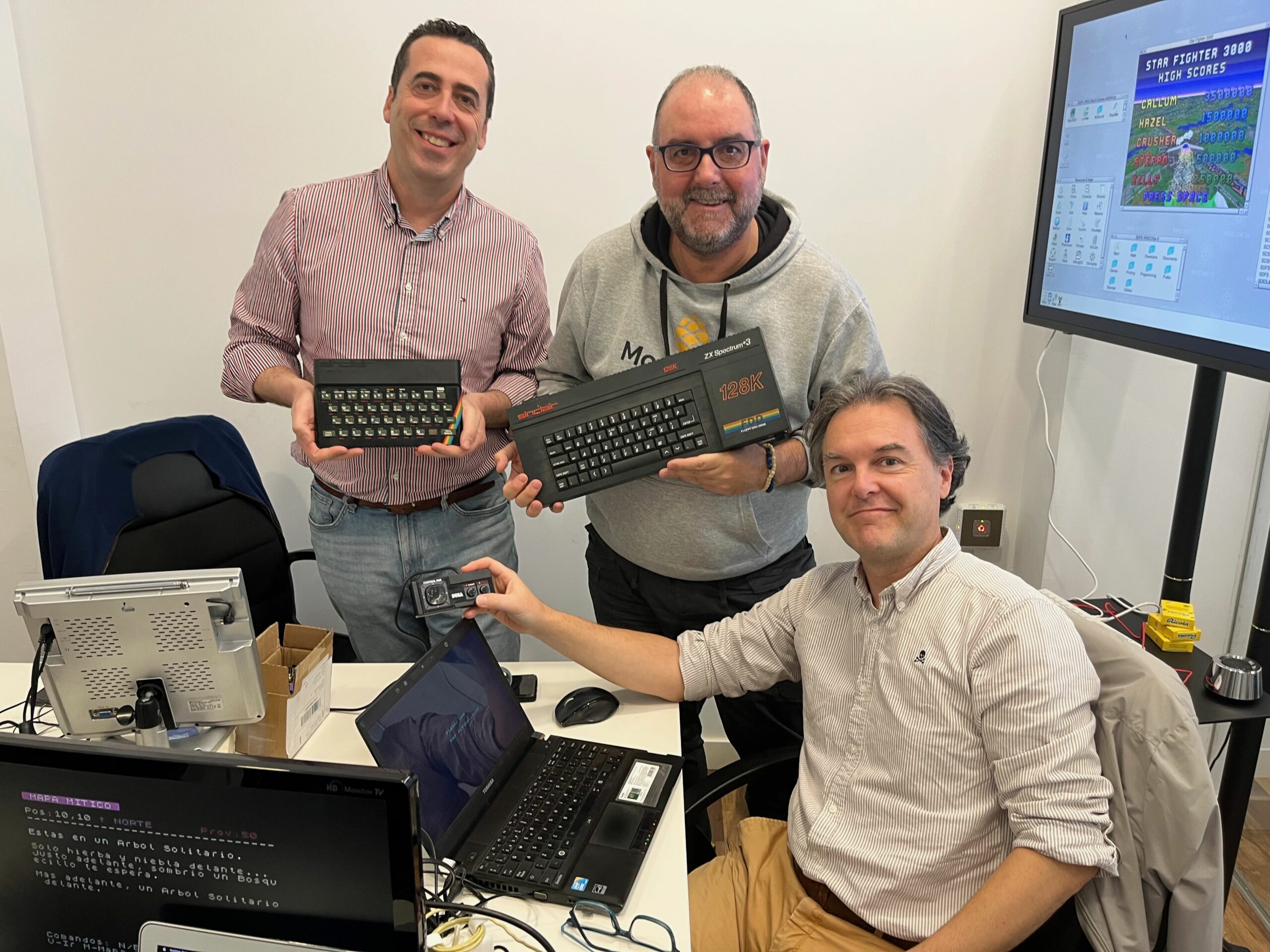
At this month’s Retrobytes meeting at LaZona Coworking , something seemingly simple ended up attracting a lot of attention: printing again from a ZX Spectrum.
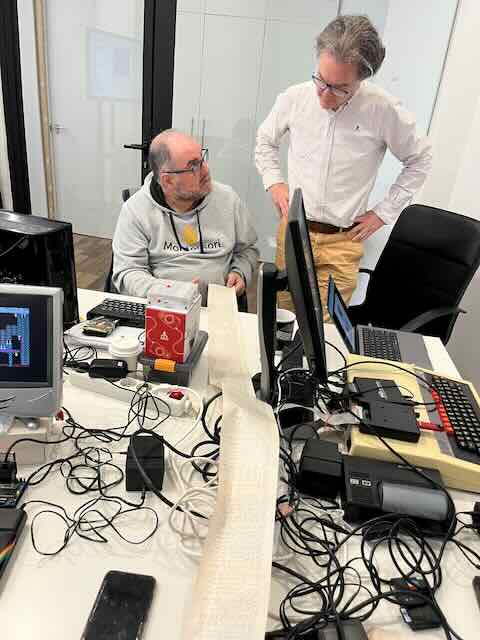
Using an Alphacom 32 , I printed a long list of Mythic Map ‘s code along with some of the game’s graphical output. Even surrounded by modern monitors, adapters, and several different machines on the table, watching the BASIC code slowly appear on thermal paper still has something special about it.
Mythic Map is a project that explores procedural map generation and simple adventure-style navigation on the ZX Spectrum, with the idea of traversing a generated world rather than following a fixed map. Printing the code and some of the visual output fit perfectly with that way of working from the 1980s, when reviewing a program on paper was completely normal.
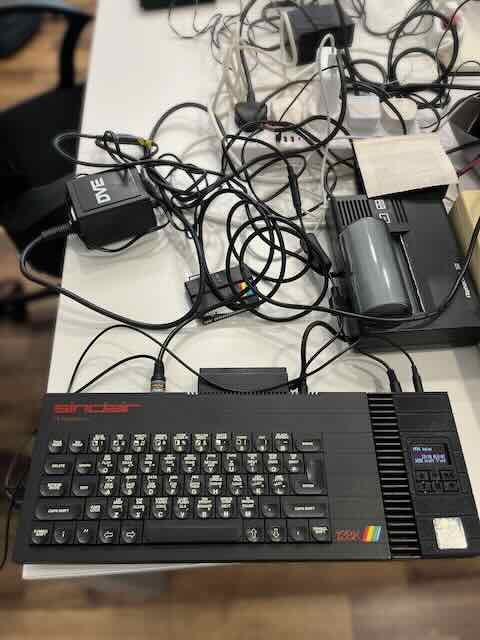
Multiple demonstrations at the same time
The atmosphere in the morning was very typical of these Retrobytes gatherings: several technical conversations happening at the same time around the same table.
While the Alphacom 32 was printing meters of BASIC listing, I also showed a small demonstration of 3D wireframe graphics in BBC Micro , using simple lines and basic perspective.
Meanwhile, José showcased an impressive modern 3D racing game for the ZX Spectrum, a recent competition winner, demonstrating just how much the machine continues to amaze today.
Natxo also brought his own Sinclair BASIC version of Mythic Map , which led to a comparison of different ways of approaching the same idea within the limitations of the Spectrum.
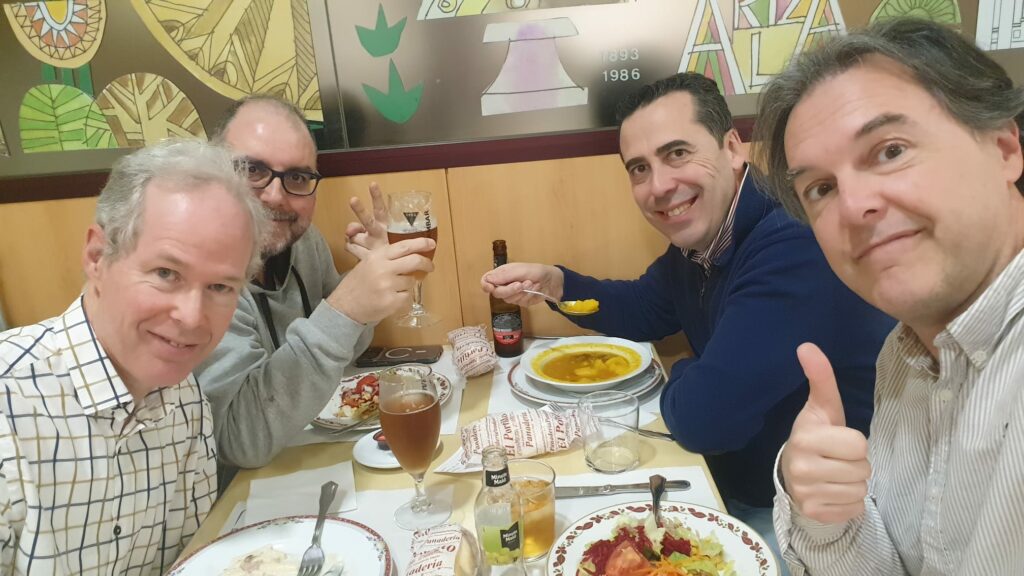
Francisco was also at the table during the session, on a morning where someone was constantly moving from one screen to another, commenting on a technical solution or asking about a specific connection.
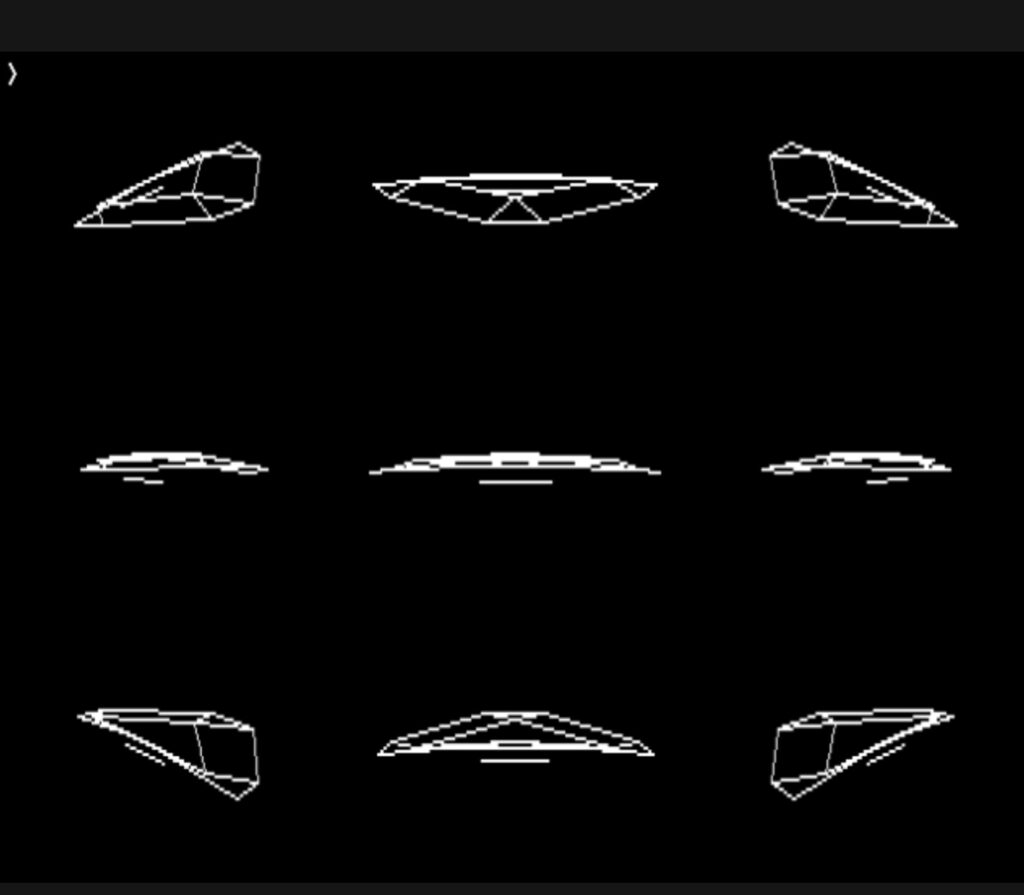
Sinclair ZX Printer vs Alphacom 32
The first truly iconic printer in the Sinclair environment was the Sinclair ZX Printer , launched in 1981 with a price of £49.95 , which today would be roughly equivalent to 210–230 euros .
It was a printer that was very representative of the Sinclair style: small, ingenious, economical and quite different from any other option of the time.
Their system didn’t use ink or thermal paper, but rather electrical spark printing on metallized paper. Small electrical discharges burned dots onto the paper, allowing the printing of BASIC listings, simple graphics, and screen captures.
Its advantages were clear:
- very small size
- relatively affordable price
- direct connection and easy use with Sinclair machines
But its limitations soon appeared as well:
- I needed special metallic paper
- The print quality was limited and degraded over time.
- the mechanism could be delicate
- It generated a lot of electrical interference.
Although technically very original, over time it began to be seen more as a curiosity than a truly practical printer. Sinclair eventually lowered its price to maintain interest, but even so, it ended up being withdrawn from the market relatively soon, partly because other thermal or dot-matrix solutions offered greater reliability and practical utility.
The Alphacom 32 , which appeared shortly afterwards for around £59.95 (about €250–290 today ), solved many of those problems.
When using thermal paper , it offered:
- cleaner and more uniform printing
- quieter operation
- easy to replace paper
- greater overall reliability
Furthermore, it gave a feeling much closer to a practical home printer than to a technical experiment.
That explains why it remains so interesting today: compatible thermal paper is still readily available and many units still function well with basic maintenance, usually printhead cleaning and power checks.
Viewed together, both printers represent two very different approaches to early home computing: the Sinclair as a brilliant experiment and the Alphacom as a truly usable solution.
It still has something special.
Printing from an 8-bit machine is no longer practical, but it completely changes the feel of the software: the code becomes something physical.
This was especially noticeable when seeing the Mythic Map listing spread out on the table alongside Spectrum demos, BBC Micro graphics, and other machines from different eras.
And perhaps that sums up these encounters quite well: one machine starts printing, another displays something unexpected, and in the end everyone ends up looking at the same thing.
If you are interested in participating in events like this, you can contact Retrobytes: it’s always a good time to share machines, projects and conversation about classic computing.