Retro Rendezvous: From an A3000 Unboxing to Two-Player Elite
Our latest retro computing gathering at Falkirk Business Hub was a great success, with an excellent variety of projects, classic Acorn hardware, programming demonstrations and modern innovations breathing new life into vintage computers.
As always, part of the pleasure of these events is discovering what everyone has been working on.
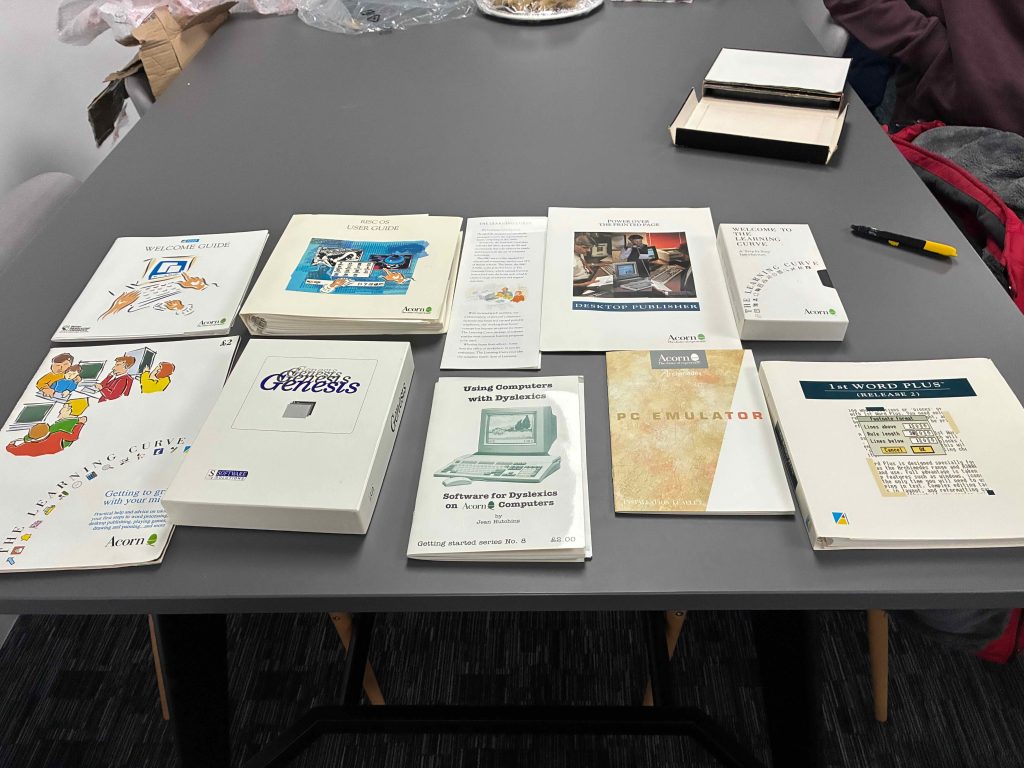
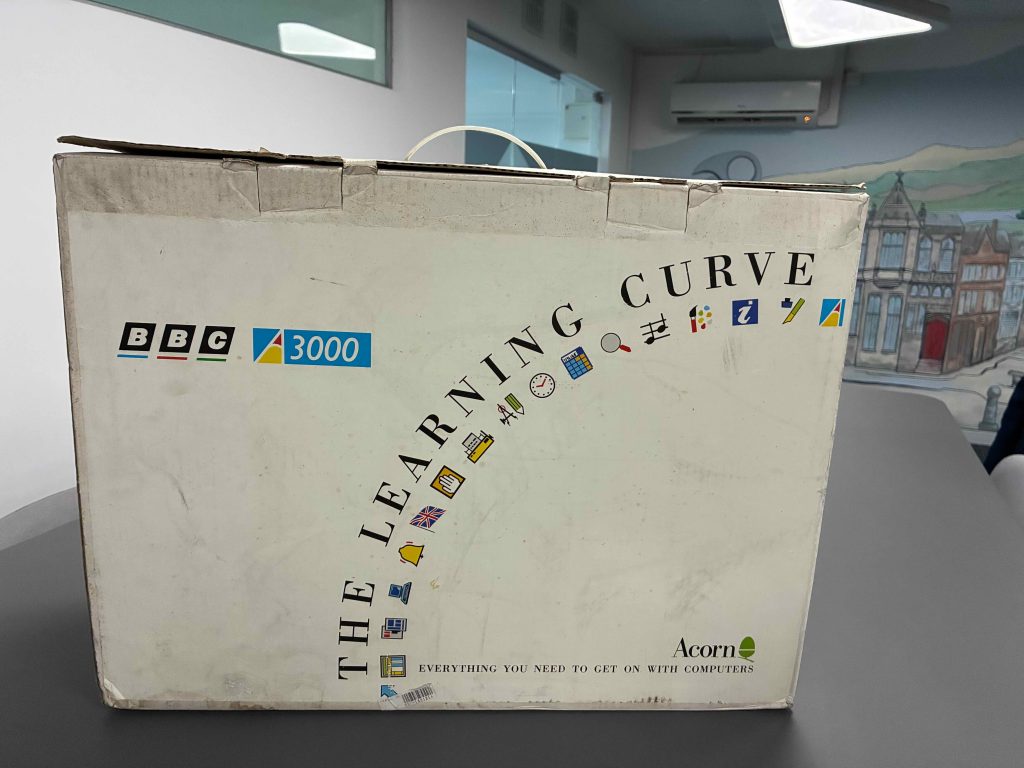
Unboxing an Acorn A3000 Learning Curve
One of the highlights of the day was the unboxing of an Acorn A3000, complete with all the original materials from the Learning Curve package.
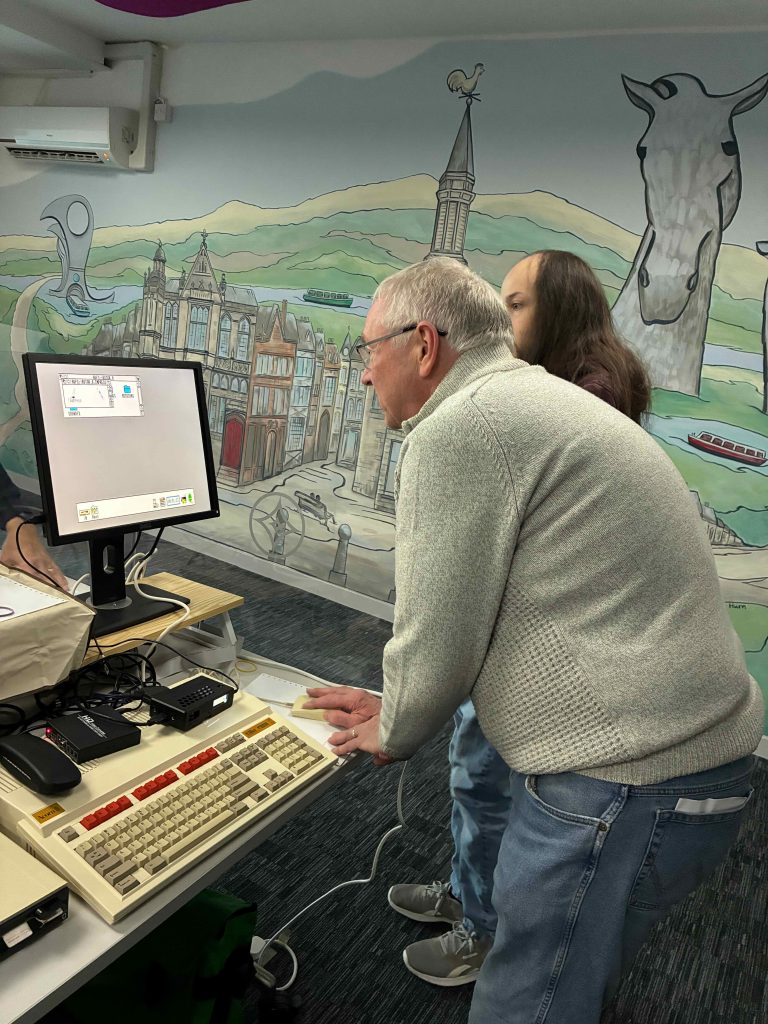
The computer was in excellent condition, with its memory upgraded to 2MB and a built-in Gotek floppy drive emulator, providing a convenient way to access Archimedes software.
Getting a stable display on a modern monitor proved a little more challenging. Fortunately, Dave had brought along an OSSC (Open Source Scan Converter), which solved the problem.
It’s wonderful to see a Learning Curve package still together after more than three decades, particularly given the A3000’s important place in British educational computing.
Elite – Twice the Adventure!
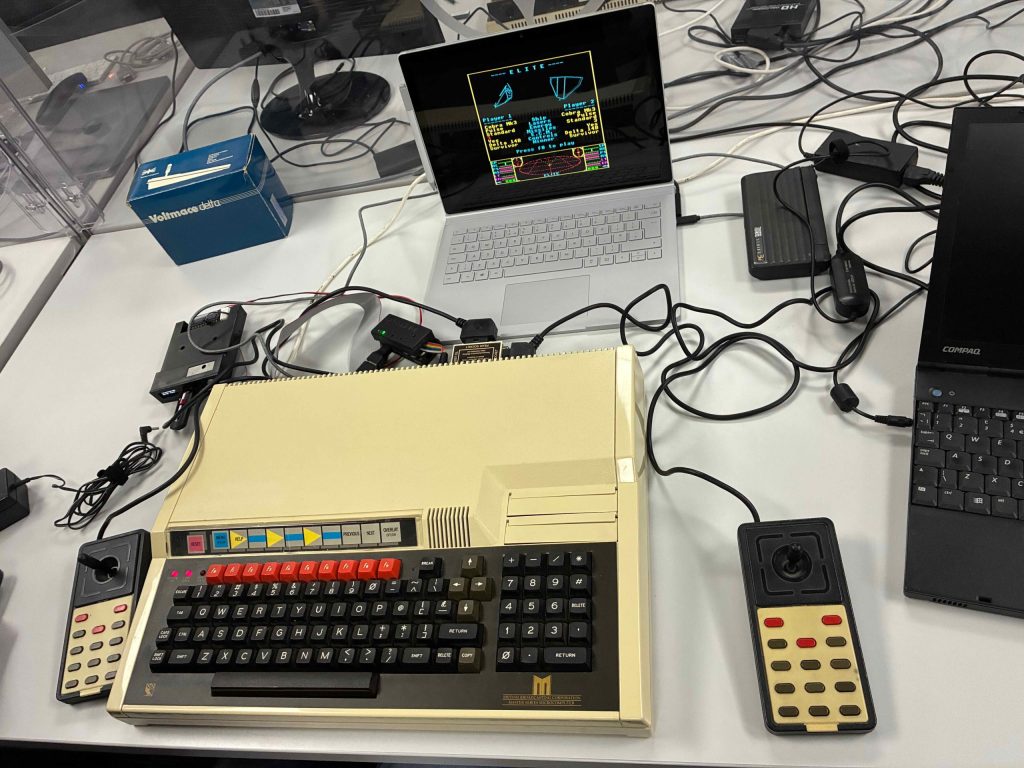
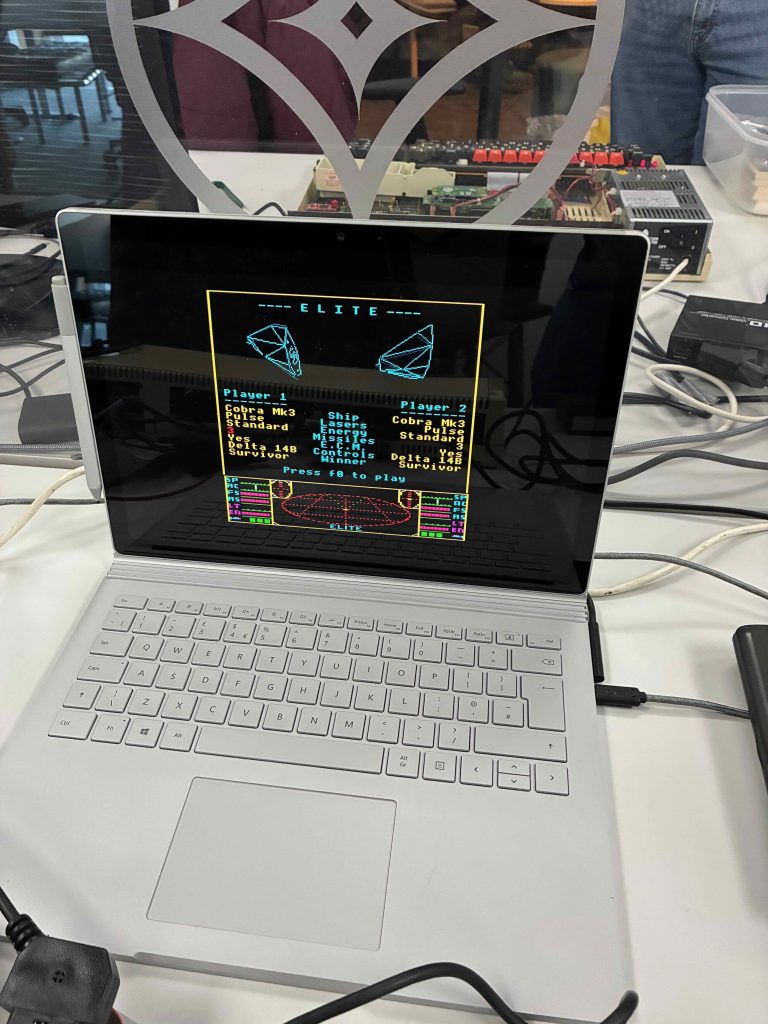
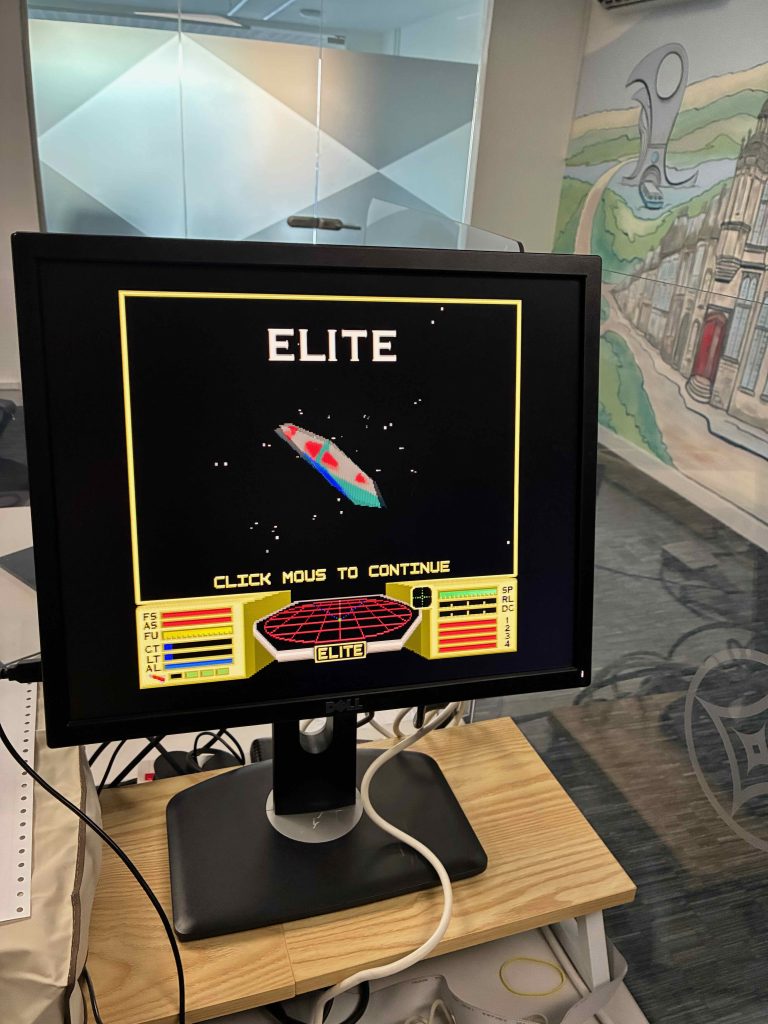
Chris brought along an impressive setup demonstrating Mark Moxon’s two-player version of Elite.
The original Elite remains one of the defining achievements of British computer gaming, so it’s fascinating to see how enthusiasts are continuing to develop and extend the game more than 40 years after its original release.
Domesday: Preserving a Digital Time Capsule
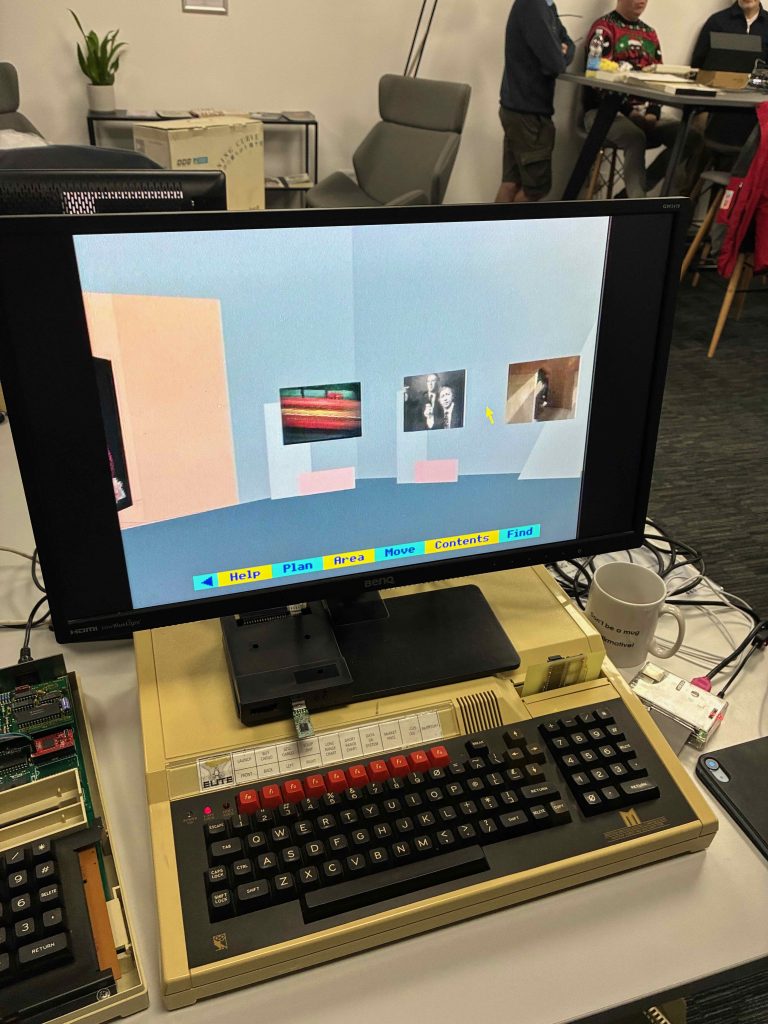
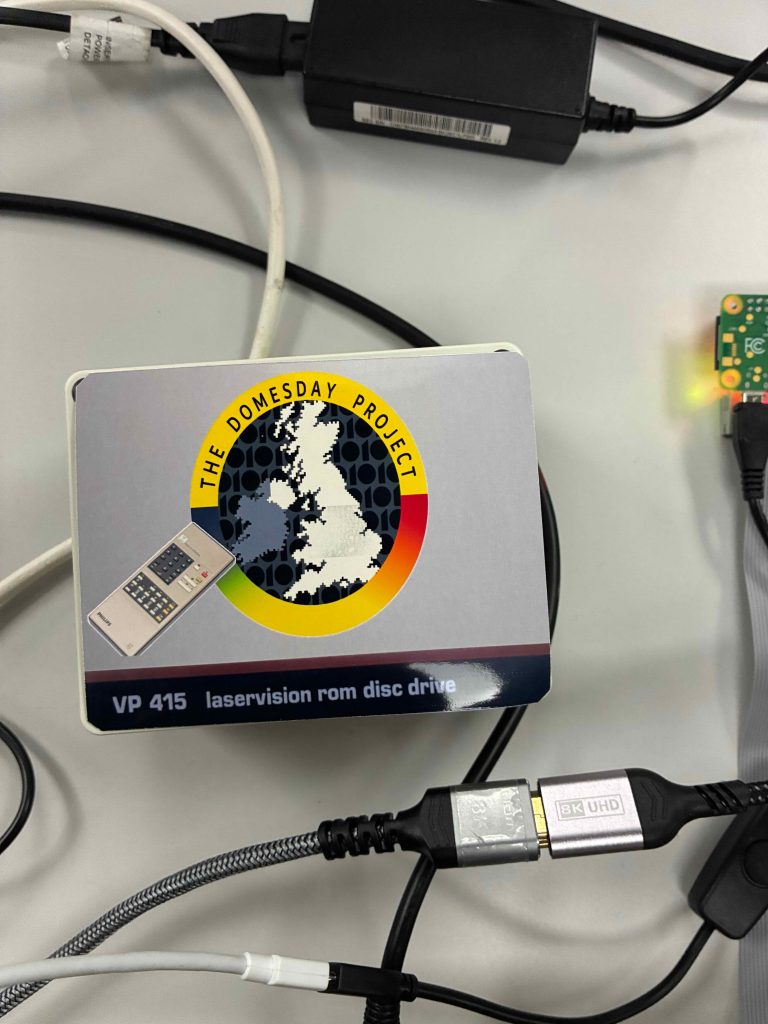
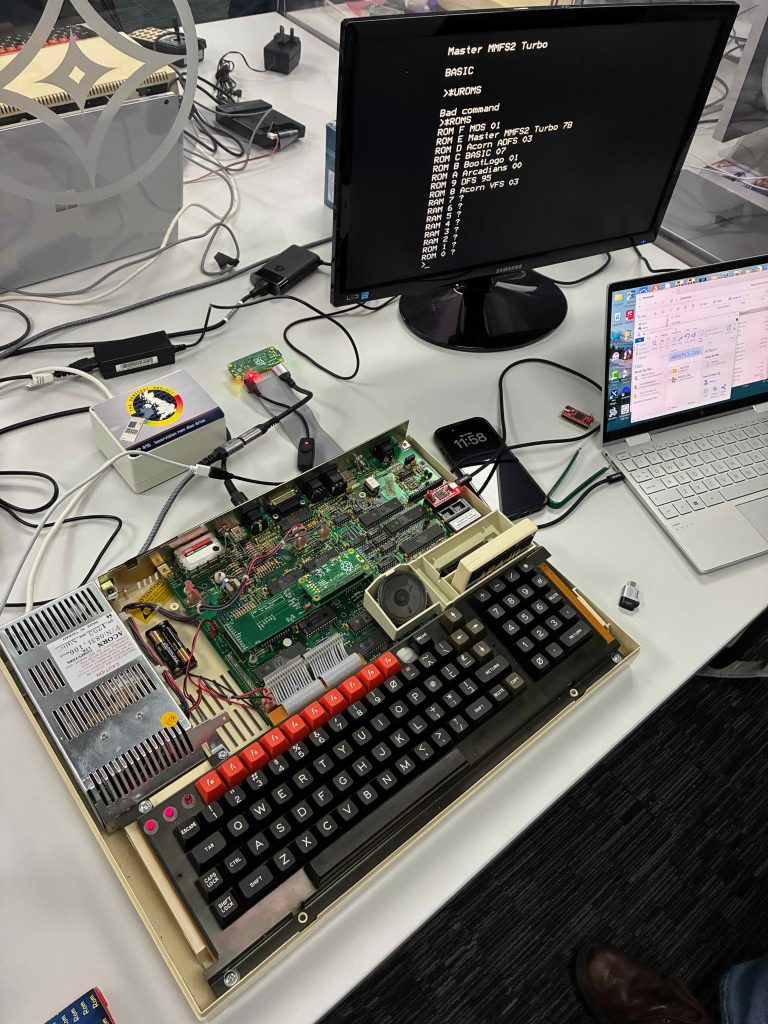
Dave was setting up his Raspberry Pi-based Domesday project, housed in an attractive enclosure which can be seen just behind his BBC Master.
The original BBC Domesday Project of 1986 was an extraordinarily ambitious attempt to capture a snapshot of British life, combining photographs, maps, statistics and interactive multimedia.
Modern projects such as these help ensure that this remarkable piece of our digital heritage remains accessible.
Michael also demonstrated his Domesday setup, including the fascinating interactive 3D gallery.
New ROM Technology for the BBC Master
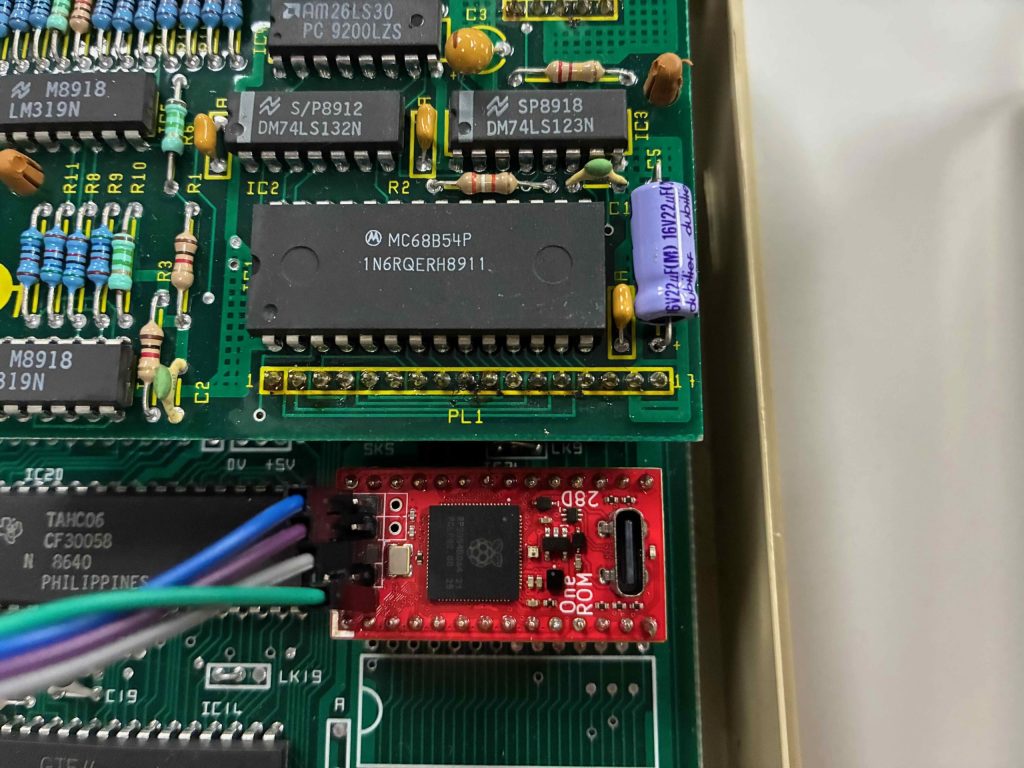
Michael and Dave were also making use of OneROM devices in their BBC Masters.
It’s particularly pleasing to see modern electronics being developed for these machines, offering new and flexible ways of using ROM-based software whilst retaining the character of the original hardware.
Exploring BCPL
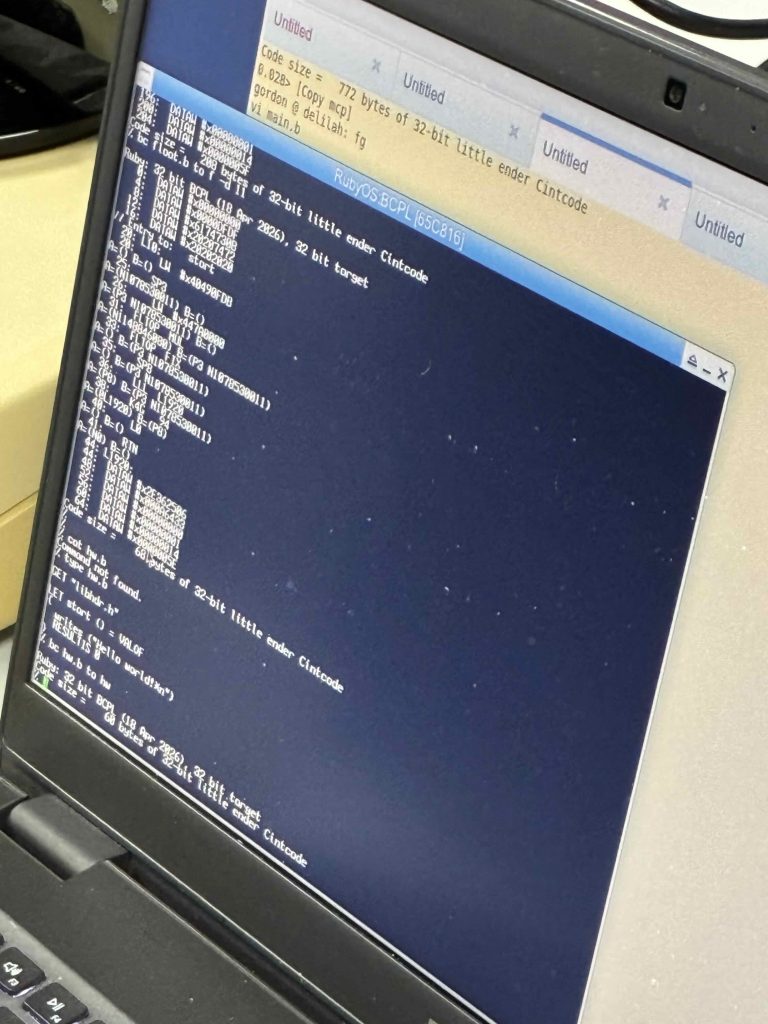
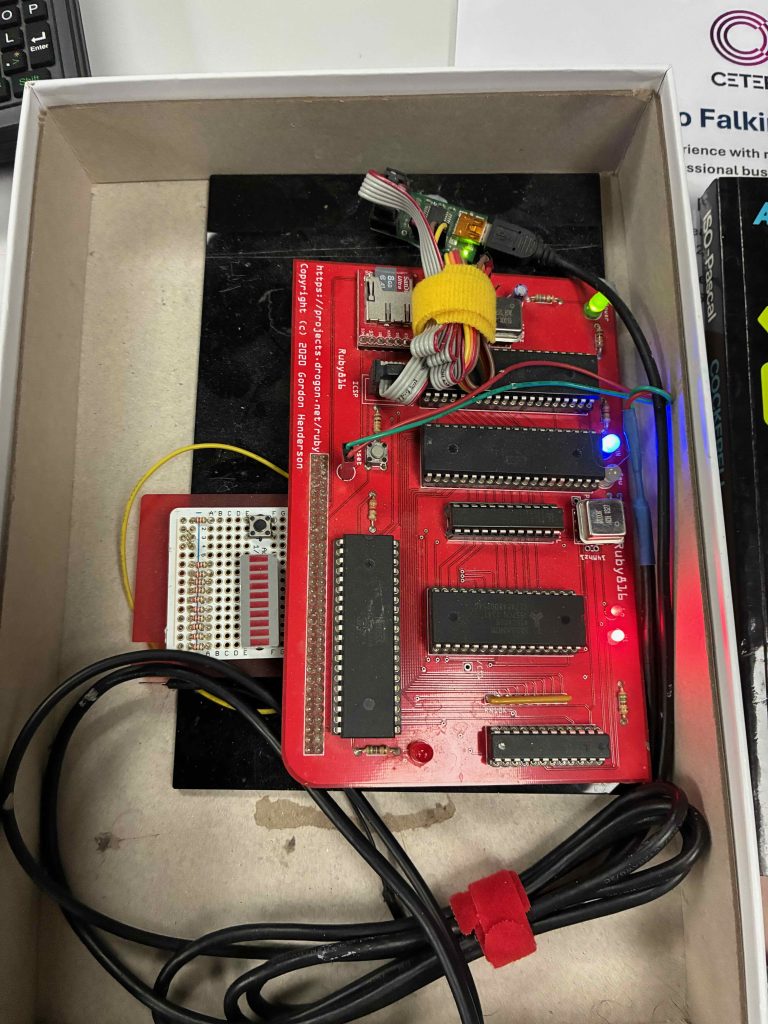
Gordon demonstrated his BCPL project running on a 65C816 processor.
BCPL has an important place in the history of programming languages, having influenced the development of C and, subsequently, many of the languages we use today.
Seeing this language being explored on retro computing hardware is a reminder that our hobby is as much about software, experimentation and learning as it is about collecting computers.
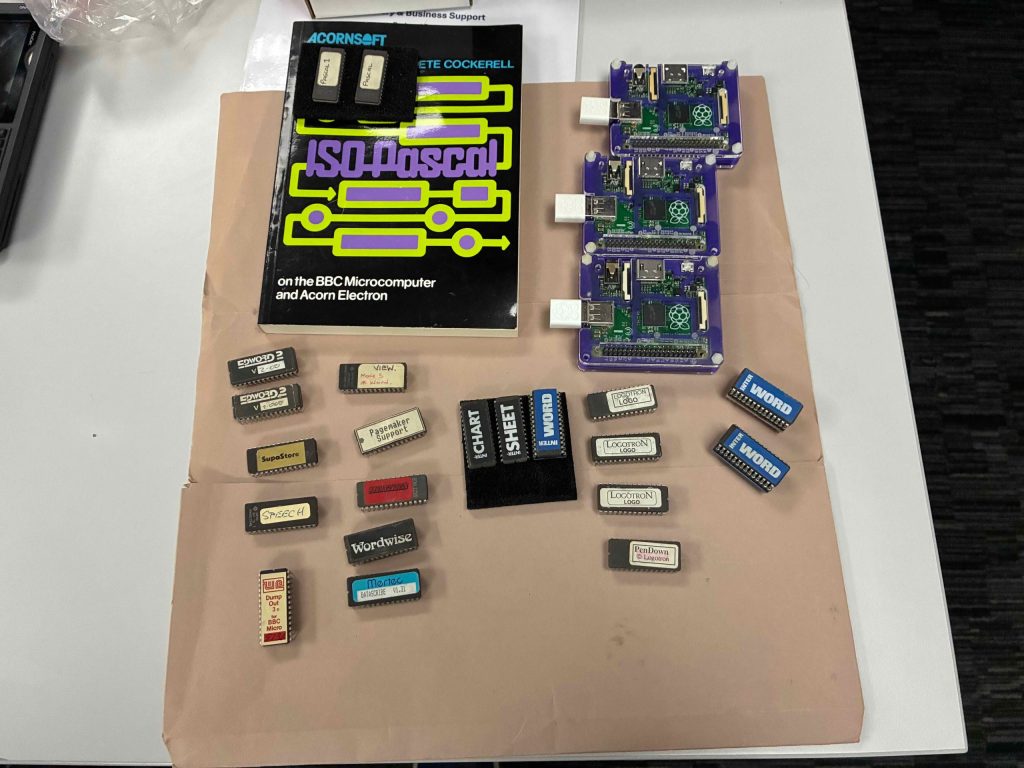
Gordon also very kindly brought along a collection of ROMs and manuals to pass on to other members of the group.
A Christmas Jumper in MODE 1
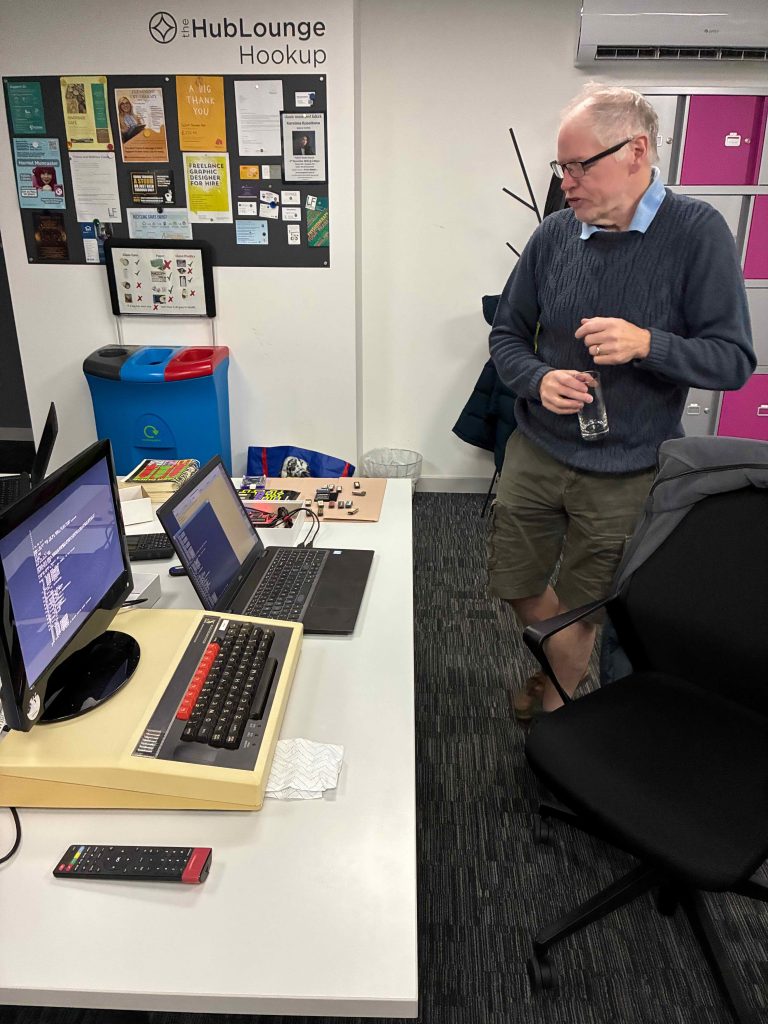
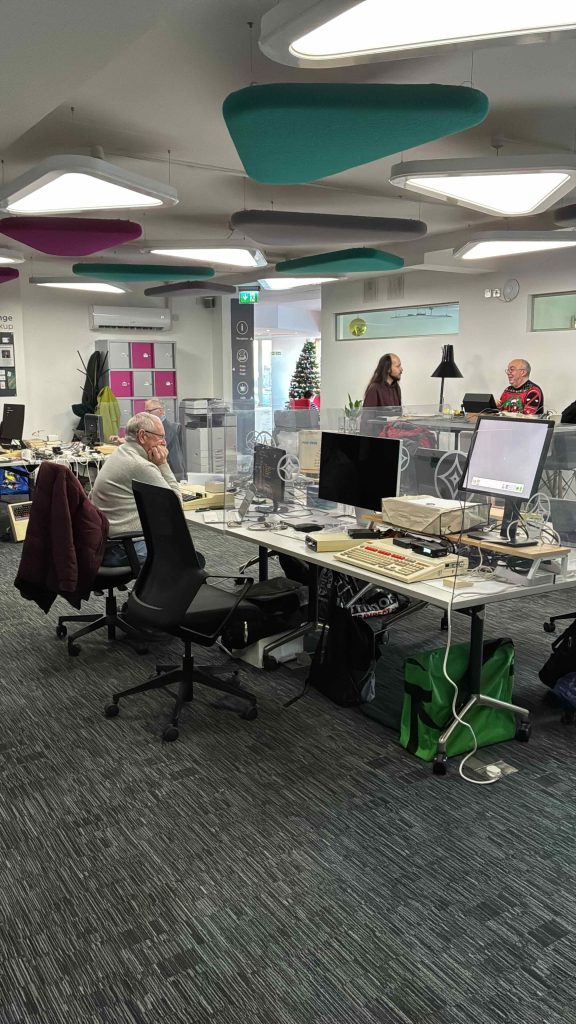
As a bonus photograph, we have Gary standing in the background on the right, next to Chris.
Fortunately for the photographer, Gary was in the background, as his particularly vibrant Christmas jumper appeared to be operating in full-colour MODE 1!
Keeping Retro Computing Alive
What makes these gatherings so enjoyable is the sheer diversity of projects on display. From preserving the BBC Domesday Project to extending Elite, exploring classic programming languages and bringing an original Archimedes back into service, there is always something new to discover.
A big thank you to everyone who came along, brought equipment, shared their knowledge and helped make it another thoroughly enjoyable day.
If you have an interest in retro computing, whether you’re a collector, programmer, hardware enthusiast or simply nostalgic for the computers you grew up with, you’re very welcome to join us at a future Retro Rendezvous event.
You can also follow the discussion and see more photographs in our event thread on the StarDot forums.